
Cleverly Review (2026): The Truth About B2B Lead Gen & A Smarter Alternative
Cleverly Review (2026): The Truth About B2B Lead Gen & A Smarter Alternative

The promise of automated lead gen is seductive. The reality? A pipeline clogged with unqualified prospects and a premium brand reputation on the line. You've likely seen tools like Cleverly that promise to fill your calendar on autopilot. But for high-growth companies targeting high-ticket clients, this volume-over-value approach is a trap that commoditises your expertise and attracts the wrong audience.
This is not another surface-level review. We are tearing down the entire outbound model, exposing the hidden risks these platforms pose to elite brands. We’ll show you the raw data on why aggressive outreach kills authority and damages your market position. More importantly, we’ll reveal the authority-based framework for attracting clients who are already sold on your value. Forget chasing. It’s time to unlock a predictable client acquisition system that makes selling effortless and establishes market dominance.
Key Takeaways
Cleverly
Discover how aggressive outreach can damage your brand's authority and attract low-quality, price-sensitive leads.
Shift from chasing prospects to attracting high-ticket clients by building an undeniable Authority Engine.
Get the 3-step framework to systematically build market authority and create a predictable inbound lead flow.
Cleverly Review (2026): The Truth About B2B Lead Gen & A Smarter Alternative
Cleverly Review (2026): The Truth About B2B Lead Gen & A Smarter Alternative
The Core Mechanics of Outbound Lead Gen
The High-Volume Gamble: Pros & Cons of the Outbound Model
The Upside: Speed and Predictability
The Downside: Brand Dilution and Lead Quality
The Authority Alternative: Shifting from Chasing to Attracting
Why Authority Crushes Volume for High-Ticket Sales
How to Build an Authority Engine: A 3-Step Framework
Step 1: Nail Your Strategic Foundation
Step 3: Build Your Conversion System
Your Next Move: Outbound Scale or Inbound Authority?
Your Move: Scale with Volume or Dominate with Authority?
Is Cleverly a legitimate company?
How much does Cleverly.co cost?
What are the best alternatives to Cleverly for high-ticket lead generation?
Does cold email and LinkedIn outreach still work in 2026?
What is the difference between lead generation and authority marketing?
How long does it take to build authority in a market?
Can you combine outbound tactics with an authority-building strategy?
Cleverly
Cleverly predictable lead volume for B2B companies. They don’t sell complex strategy; they sell a lead generation machine.
Their core arsenal consists of three direct outreach channels:
Cold Email Campaigns
Cold Calling Execution
Automated LinkedIn Outreach
This is a numbers game, executed at scale. The entire system is designed to fill your pipeline by systematically targeting and engaging potential buyers. For many founders, an agency like Cleverly represents a turnkey solution to a persistent growth bottleneck.
The Core Mechanics of Outbound Lead Gen
The process is brutally efficient and stripped of fluff. It starts with aggressive list building to identify thousands of potential targets. From there, scripts are written and loaded into automation platforms for mass outreach. This is a direct, 'hunting-based' approach to B2B growth. The entire machine is built to execute the core function of what is lead generation: identifying and cultivating potential customers at a massive scale. This model is for companies that need a high volume of at-bats to hit their revenue targets.
Cleverly
This model thrives on volume and clarity. It’s a perfect fit for SaaS and tech companies with a clear, easily defined Ideal Customer Profile (ICP). If you’re selling a product with a straightforward value proposition, this high-velocity approach can unlock rapid pipeline growth.
However, the model breaks down with complexity. It is not for high-ticket consulting, nuanced enterprise sales, or premium strategic services. Why? Because selling strategic expertise requires trust and deep qualification, not just volume. This is the critical difference: selling a product versus selling a high-stakes partnership.
The High-Volume Gamble: Pros & Cons of the Outbound Model
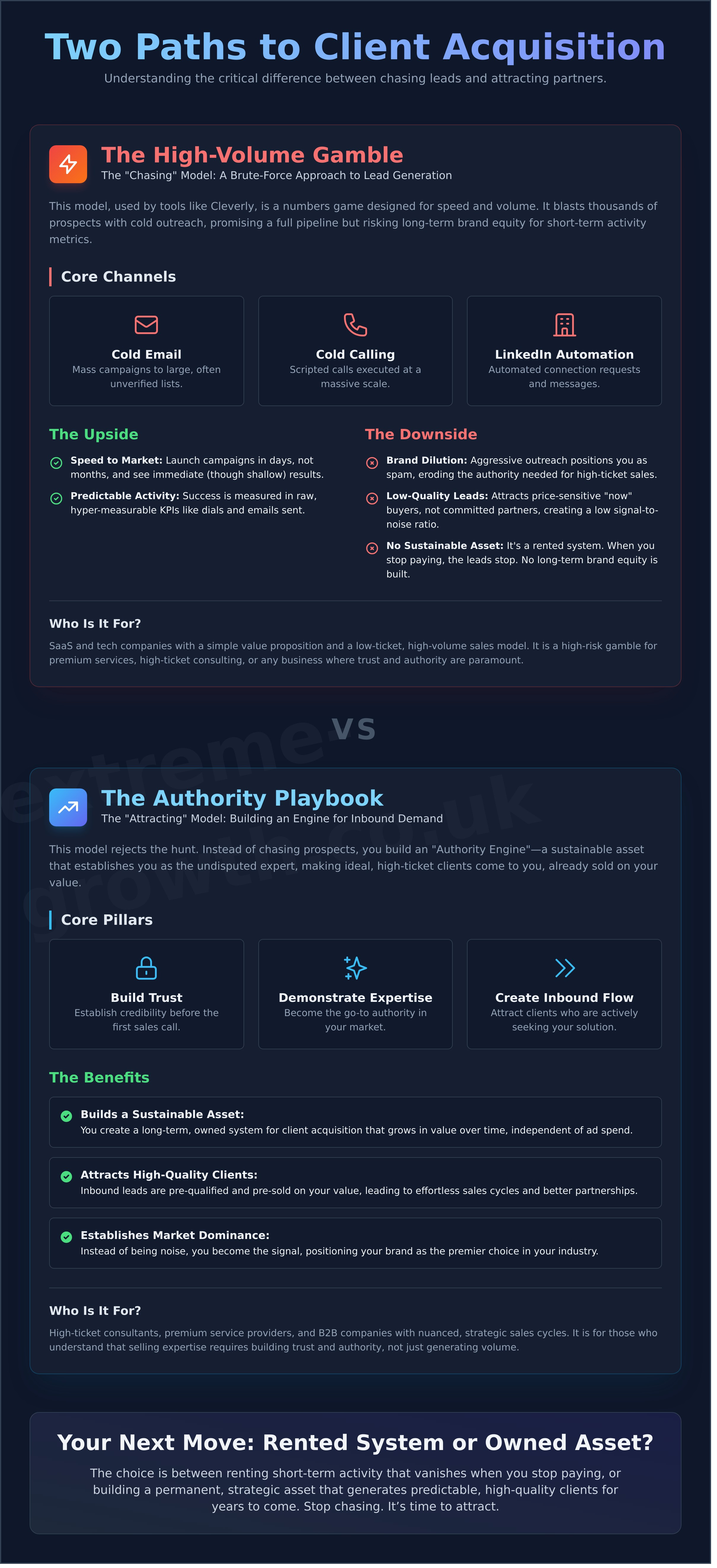
High-volume outbound is the brute-force approach to lead generation. It’s a numbers game, plain and simple. Agencies built on this model, some of which operate very cleverly, promise to fill your pipeline by blasting thousands of prospects with cold outreach. For founders chasing immediate activity, the appeal is undeniable. But this speed comes at a price. It’s a strategic gamble that pits short-term metrics against long-term brand equity.
The Upside: Speed and Predictability
To be fair, the outbound model isn't without merit. Its primary advantage is speed. You can launch a campaign in days, not months, and see initial replies almost immediately. This system is also hyper-measurable. You track dials, emails sent, and connection rates, creating a predictable, if shallow, funnel. For B2B companies selling low-ticket, transactional products, this can be a viable path to generating initial traction.
Rapid Deployment:Go from zero to outreach in record time.
Clear KPIs:Success is measured in raw activity metrics.
Transactional Fit:Effective for high-volume, low-complexity sales cycles.
The Downside: Brand Dilution and Lead Quality
Here’s where the gamble sours, especially for premium service brands. Aggressive, impersonal outreach is a fast track to the spam folder, actively eroding the authority you need to close high-value deals. Instead of positioning yourself as an expert, you become just another piece of noise in a crowded inbox. This approach repels the strategic partners you want, as it completely bypasses the critical need to build an authority engine that attracts, rather than interrupts, your ideal clients.
The lead quality reflects this strategy. You get a pipeline full of "now" buyers looking for the cheapest, fastest fix-not committed partners invested in long-term value. This creates a low signal-to-noise ratio, forcing your sales team to waste cycles filtering out unqualified contacts.
Worse, it’s a rented system. The moment you stop paying the agency, the lead flow shuts off completely. You’ve built no sustainable asset, no brand equity, no inbound demand. This model can cleverly mask a weak product-market fit with vanity metrics, but it never builds a true growth foundation.
The Authority Alternative: Shifting from Chasing to Attracting
The traditional ad model is a hunt. You spend aggressively to chase down leads, fighting for attention in a crowded marketplace. It’s a volume game that forces you into an endless cycle of escalating ad spend. We reject this. The alternative is to stop hunting and start farming. Build an asset that makes ideal clients come to you.
This is Authority Marketing. The core concept is simple but transformative: become the undisputed expert in your niche. You stop selling a service and start positioning your expertise as the product. This shift cleverly sidesteps the competition, attracting pre-qualified, high-ticket buyers who see you as the only logical choice.
What is an Authority Engine?
An Authority Engine is not a campaign; it's a system. It’s a machine designed to systematically build, package, and broadcast your expertise at scale. Instead of relying on cold outreach and interruption-based ads, it leverages strategic content as its primary weapon. The goal is to own the market conversation, not just rent space within it.
Why Authority Crushes Volume for High-Ticket Sales
For high-value deals, trust is the ultimate currency. A high-volume ad strategy might generate noise, but an authority strategy generates conviction. It’s about building a defensible moat around your brand that competitors simply cannot copy. Your reputation becomes your most powerful lead-generation tool.
Shortens Sales Cycles:Trust is established long before the first sales call. Prospects arrive pre-sold on your value, ready to execute.
Creates an Unfair Advantage:While competitors burn cash on clicks, you build an appreciating asset. A powerful reputation is impossible to replicate.
Unlocks Inbound Demand:It generates a consistent flow of inbound leads who are already convinced you are the answer. They seek you out. See our full guide on Authority Marketing to build your own engine.
How to Build an Authority Engine: A 3-Step Framework
Authority isn't accidental. It's engineered. Forget vague theories and marketing fluff. This is the exact, repeatable system we use to build market-dominating brands-a blueprint for turning ambitious founders into the undeniable #1 choice in their niche.
Step 1: Nail Your Strategic Foundation
Growth built on a weak foundation will collapse. We start by fortifying your position with brutal clarity. This means defining precisely who you serve and the one high-value problem you solve better than anyone else. We don't guess; we model your ideal high-ticket client avatar, mapping their deepest pains and motivations. This intelligence is then used to craft a core message so sharp it cuts through the noise and commands attention.
Step 2: Engineer Omnipresence
Your expert message is useless if it’s not seen. The next phase is aggressive, multi-channel distribution. We identify the exact digital battlegrounds where your clients congregate and execute a two-pronged attack:
Organic Authority:We build deep trust and credibility with high-value content that establishes you as a thought leader.
Paid Amplification:We use paid ads as rocket fuel, cleverly targeting your avatar with relentless precision to ensure you are seen everywhere.
The goal is total market saturation. When a prospect thinks about their biggest challenge, your name is the only one that comes to mind.
Step 3: Build Your Conversion System
Attention without action is a vanity metric. The final step is to convert your manufactured authority into tangible revenue. We engineer a frictionless system designed to move prospects from first touchpoint to closed deal with maximum efficiency. This involves creating high-impact assets-case studies, VSLs, and data-backed reports-that are cleverly designed to answer objections before they're even raised. Every step of the client journey is meticulously optimised to turn interest into high-value consultation calls. This is how you stop chasing leads and start attracting clients who are already sold on your expertise.
This isn't just theory. It's the engine we build for our partners. See the results of this framework in action at extreme-growth.co.uk.
Your Next Move: Outbound Scale or Inbound Authority?
The choice is stark. An in-house team often defaults to an outbound, volume-based game. A specialist Weybridge agency builds an inbound authority engine. This isn't just about who runs your ads; it's a fundamental choice between brute force and strategic precision. You mustcleverlyalign your acquisition model with your business goals, or you'll burn cash fighting the wrong war.
Use this framework to make your decision. No fluff, just the facts.
Choose Outbound If...
Your model is built for volume. You have a high-turnover, transactional sales process designed for speed over depth.
Quantity trumps quality.Your primary metric is raw lead count, and you need immediate campaign activity to feed the machine.
Brand is secondary to activity. You are less concerned with long-term brand equity and more focused on hitting this month's target.
Choose Authority If...
You sell high-ticket value.Your offer is complex consulting, SaaS, or a premium service where expertise is the core product.
You want pre-sold clients.Your goal is to attract buyers who respect your process and don't haggle on price because they already see you as the market leader.
Your goal is market dominance. You are building a long-term, defensible position that competitors simply cannot replicate.
For founders of premium businesses, the choice is an illusion. The outbound path inevitably commoditises your expertise and attracts an endless stream of low-quality, price-shopping leads. The authority model, however, cleverly filters for quality, builds a moat around your brand, and creates a predictable pipeline of ideal-fit clients.
It's the only sustainable path to extreme growth. Stop chasing. Start commanding.
If Authority is your path, it's time to build the foundation.Book your Strategic Foundation Audit now.
Your Move: Scale with Volume or Dominate with Authority?
The verdict is in. Outbound tools like Cleverly operate on a model of high-volume, low-impact outreach. It's a numbers game that floods inboxes, burns your domain reputation, and positions you as just another commodity chasing a response. The alternative isn't just smarter-it's a fundamental shift in strategy. Building an inbound Authority Engine flips the script, making you the sought-after expert clients are desperate to work with.
For ambitious service businesses between £500K - £10M, this isn't a theoretical choice; it's the critical pivot from stagnation to predictable hyper-growth. Our proprietary Authority Operating System™ is not a collection of tactics. It's a battle-tested engine built on proven frameworks designed to systematically install you as the definitive market leader. We don't build temporary campaigns. We build permanent client acquisition machines.
The time for incremental gains is over. If you're ready to stop competing and start dominating, your next move is clear. Stop Chasing Leads. Start Attracting Clients. Book Your Audit.
Frequently Asked Questions
Is Cleverly a legitimate company?
Yes, Cleverly is a legitimate LinkedIn automation and lead generation service. They execute high-volume outreach campaigns for clients. However, legitimacy does not guarantee results for high-ticket B2B sales. Relying solely on automated outreach is a low-leverage play. Founders targeting enterprise deals need a more sophisticated, multi-channel strategy that builds genuine trust and authority, not just a tool that blasts connection requests.
How much does Cleverly.co cost?
Cleverly.co pricing typically ranges from $300 to over $1,000 per month, depending on the service tier selected. This cost covers their software platform and campaign management for LinkedIn and email outreach. The critical question isn't the price tag, but the ROI. For high-ticket SaaS or service businesses, this investment often yields low-quality, transactional leads. You are paying for volume, not for high-intent buyers who view you as the market leader.
What are the best alternatives to Cleverly for high-ticket lead generation?
The best alternatives abandon volume-based tactics for high-leverage systems. Instead of using a tool like Cleverly for mass outreach, elite founders build authority marketing funnels. This involves creating category-defining content, running hyper-targeted paid ad campaigns, and developing a personal brand that attracts ideal clients. This strategy creates an inbound flow of pre-sold, high-ticket leads who are ready to buy, not just book a call.
Does cold email and LinkedIn outreach still work in 2026?
Yes, but not in the way most agencies practice it. Generic, high-volume cold outreach is dead. In 2026, success demands hyper-personalisation at scale and a multi-channel approach. It is no longer a primary growth driver but a supplemental tactic to amplify other marketing efforts. Relying on it as your core strategy is a recipe for stagnation. The real leverage comes from building a brand that makes prospects come to you.
What is the difference between lead generation and authority marketing?
Lead generation is hunting. It's the aggressive, short-term pursuit of prospects through tactics like cold calls and mass outbound emails. Authority marketing is building a magnet. You become the undisputed expert in your niche, systematically pulling ideal clients into your orbit with high-value content and strategic positioning. One chases revenue today; the other builds a defensible asset that generates predictable, high-margin revenue for years.
How long does it take to build authority in a market?
Building true market authority is a 6-12 month mission, not a weekend project. The initial phase requires aggressive content deployment and strategic amplification across paid and organic channels. The results compound exponentially. While your competitors are stuck on the transactional lead-gen hamster wheel, you’re building an untouchable brand asset. This system generates high-intent inbound leads on autopilot, unlocking predictable and scalable growth.
Can you combine outbound tactics with an authority-building strategy?
Absolutely. Combining them is how you achieve market dominance. Use outbound tactics not for cold prospecting, but to amplify your authority-building content. Push your best assets-webinars, case studies, and articles-directly to key decision-makers on LinkedIn and via email. This transforms a cold touchpoint into a value-add, accelerating trust and positioning you as the go-to expert. It’s a full-stack offensive for aggressive market capture.


